Backpacks are one of the steadier categories in retail. Students need them, commuters need them, travellers need them, and most people replace one every two or three years whether it has failed or not. If you are thinking about starting a reselling business, this is the route from idea to first sale, with the numbers attached.
Step 1: Pick a niche
Trying to sell every backpack to everyone is the fastest way to no margin. Pick one buyer and build for them.
- Business commuters. Anti-theft, laptop sleeve, USB pass through. $60 to $120 retail. See business backpacks.
- School and college. Light, tough, and cheap enough to replace. $30 to $60 retail. See school backpacks.
- Travel and outdoor. Water resistant, expandable, sized for a cabin. $70 to $150 retail. See travel backpacks.
- Tactical. MOLLE webbing, heavy fabric, hard wearing. $50 to $100 retail.
- Recycled and eco positioned. $50 to $120 retail, with a documentation burden most sellers underestimate. See the sustainable sourcing guide before you commit to this one.
Step 2: Check the demand is real
Before you buy anything, check that people are actually buying in your niche. Look at Amazon best sellers in the category, search the relevant hashtags on TikTok and Instagram to see whether anyone is making content about it, run your target keywords through Google Trends, and read the one and two star reviews on competitor products. The complaints are more useful than the praise, because they tell you what to spec.
Step 3: Set the business up properly first
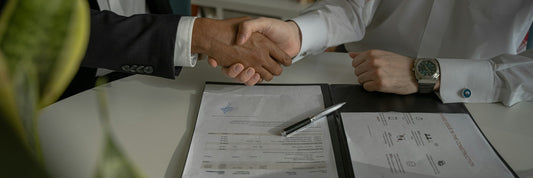
Register the entity, get a tax ID, open a business bank account, and apply for a resale certificate so you are not paying sales tax on wholesale purchases. Do this before you start talking to suppliers. Most wholesale suppliers, us included, ask for business verification documents before opening an account, and scrambling for paperwork mid conversation costs you a week.
Step 4: Find a supplier
Look for a manufacturer rather than a trader, minimums you can actually fund, and samples available before you commit. Ask for certificates rather than logos. There is a full vetting process in how to find a reliable supplier, and a scorecard for comparing two or three of them in the supplier criteria guide.
Our own minimums are 50 units per style for stock backpacks and from 100 units once your logo goes on, with colours mixable inside a style. Order two or three samples before any bulk order.
Step 5: Build the storefront
Shopify, WooCommerce or Amazon are the three main routes. Shopify gives you control and builds brand equity you own. Amazon gives you traffic and takes 15% to 20% in fees. Plenty of resellers run both, using Shopify for the brand and Amazon for volume, and accept that the two audiences behave differently.
Step 6: Price it properly
Standard markup on backpacks is 2.5 to 3 times the wholesale cost. A $25 bag retails at $65 to $79. Then subtract the things people forget: payment processing around 3%, shipping 5% to 15%, returns 5% to 8%, and marketing anywhere from 15% to 25% of revenue. Net margin usually lands between 25% and 40%.
If your sums only work at the top of that range, the price is wrong. There is a full worked example in the profit margin guide.
Step 7: Pick one marketing channel
Three things move backpacks: paid social, sending product to micro influencers, and written gear content that ranks. Start with one, learn it properly, then add the second. Running all three badly at once is the most common way a launch budget disappears with nothing to show for it.
Step 8: Reorder on evidence
When the first batch sells through, look at what went fastest and at what margin, not just what went fastest. Reorder the winners at one and a half to two times the quantity and drop the slow movers without sentiment. Most resellers who make this work run six to twelve styles at a time, not fifty.
What it costs to start
- Wholesale inventory, 100 units: $2,000 to $3,500
- Storefront, domain and apps: about $300 a year
- Opening marketing budget: $1,500 to $3,000
- Company setup and samples: $500 to $800
So $4,500 to $8,000 for a launch with real stock and enough marketing to find out whether it works. At our 50 unit minimum you can halve the inventory line and test a style for around $1,250 plus freight, which is a more honest way to start than borrowing to fill a container.
The mistakes that cost the most
Ordering too many styles on day one. Cutting your price to match an Amazon listing that is buying market share. Ignoring email, which is consistently the best return of any channel for repeat buyers. And changing supplier every time someone quotes a dollar less, which resets your quality baseline every order.
Starting your first order? Send the niche you are going after and roughly what you expect to sell in a season. We will come back with suggested styles, quantities, a unit price at that volume and the lead time, so you can build the sums before you commit any money.
Frequently asked questions
How much money do I need to start reselling backpacks?
Budget $4,500 to $8,000 for a launch with 100 units of stock and a real marketing budget. At a 50 unit minimum you can test a single style for roughly $1,250 plus freight, which is the cheaper way to find out whether the niche works.
Do I need a business licence to buy wholesale?
Yes. Wholesale suppliers sell to businesses, not individuals, and most will ask for business verification documents before opening an account. A resale certificate also stops you paying sales tax on the purchase.
How many styles should I start with?
Two or three. Most resellers who make this work settle at six to twelve styles, and they get there by reordering winners rather than by launching wide.
What margin should I expect reselling backpacks?
Markup of 2.5 to 3 times wholesale is standard, which is a 60% to 67% gross margin. After processing, shipping, returns and marketing, net margin usually lands between 25% and 40%.
Should I sell on Amazon or my own store?
Amazon brings traffic and takes 15% to 20% in fees. Your own store costs you the traffic but keeps the customer and the brand. Many resellers run both and treat them as different businesses rather than one catalogue in two places.
Related reading: MOQ explained, how to choose the right styles for your store, and 10 bulk buying mistakes to avoid.
Tags:
Previous
How to Find a Reliable Wholesale Backpack Supplier in 2026
Next
MOQ Explained: A Retailer's Guide to Wholesale Backpack Orders
Related articles

-
Jun 18 2026
Wholesale Backpack ROI Calculator: Volume & Margin Math
-
Jun 17 2026
10 Bulk Backpack Buying Mistakes Retailers Need to Avoid
-
Jun 15 2026
Travel Backpack Wholesale Trends for 2026

-
Jun 14 2026
Best Selling Wholesale Backpack Styles by Region in 2026
-
Jun 12 2026